Java

Pattern Matching | Code2Java
Java, JDK 17, JDK 21

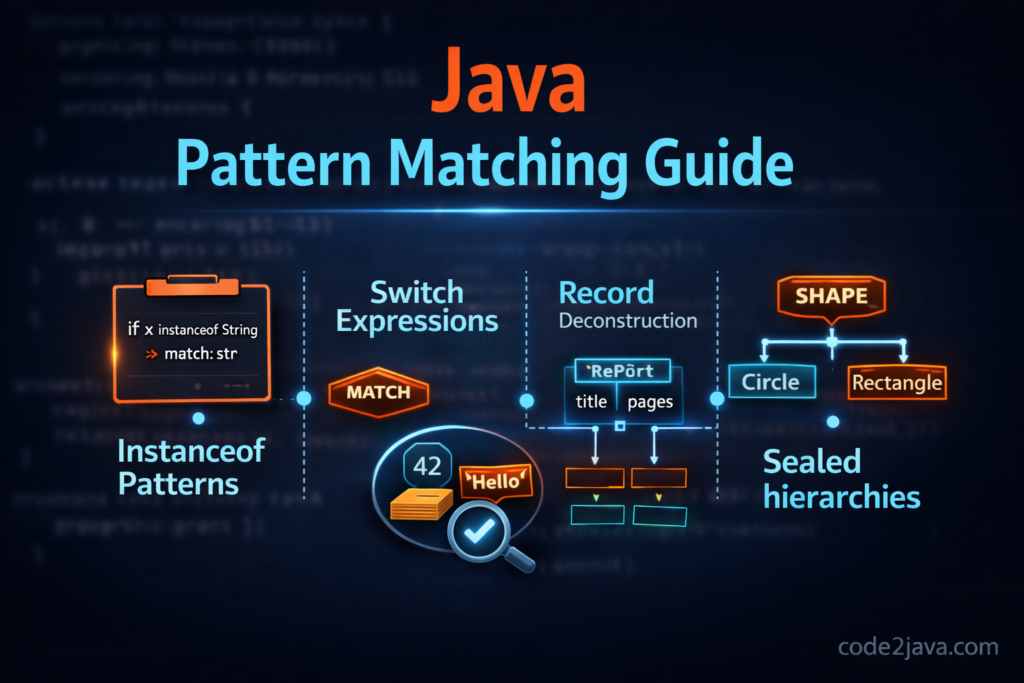
Java Pattern Matching (Java 16 → 21)

If you’ve been writing Java for a while, you probably remember this annoying pattern:

👉 Check type using instanceof
👉 Cast manually
👉 Then use the object

Pattern Matching removes this boilerplate and makes your code cleaner, safer, and more readable.
Let’s go step by step and understand how it evolved.
JDK 21 features | code2java
Java, JDK 21

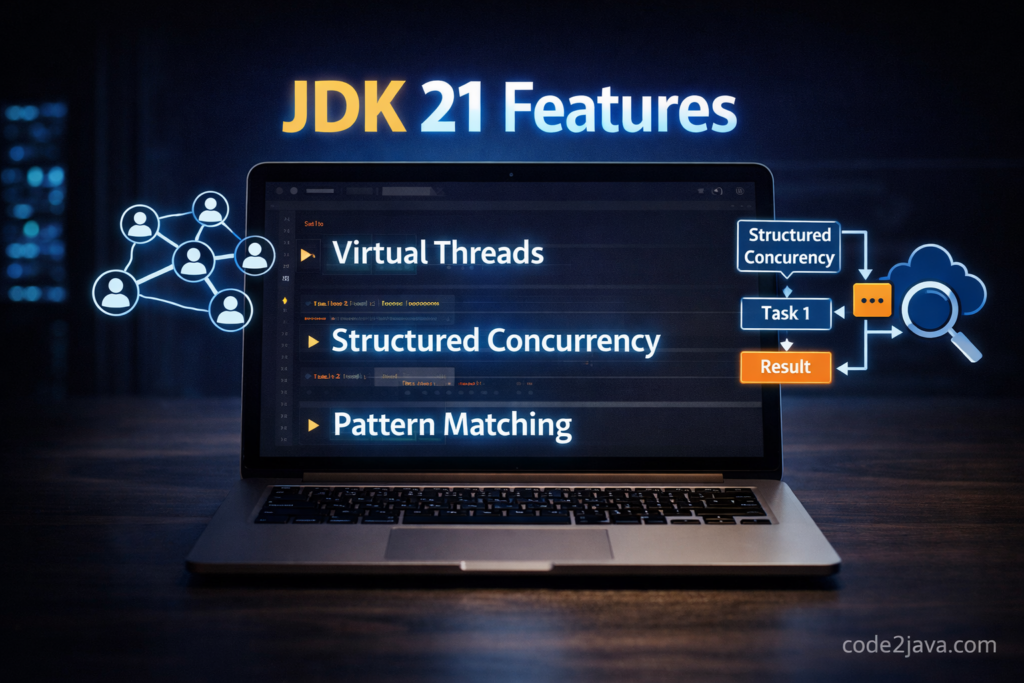
JDK 21 Features

If you’ve been working with Java for a while, you probably know that every LTS release brings something meaningful.
👉 And JDK 21 is one of those releases that actually changes how we write concurrent and scalable applications.
This isn’t just about syntax sugar — it’s about solving real problems like thread scalability, readability, and safer concurrency.

JDK 17 features | Code2java
Java, JDK 17

JDK 17 Features

A complete step-by-step guide to Java 17 features covering what, why, when to use, real-world use cases, and practical code examples. Ideal for developers moving from Java 8 to modern Java

JDK 11 vs JDK 8
Java

JDK 11 vs JDK 8

Java 8 was a revolutionary release, but Java 11 refined and modernized the platform with cleaner APIs, better performance, and long-term support. In this guide, we’ll compare Java 8 vs Java 11 across key components with practical examples and internal explanations so you clearly understand what changed and why it matters. 🚀

JDK 15 Features | Code2java
Java, Java Examples

JDK 15 features

JDK 15 brings several exciting features that improve developer productivity and JVM capabilities. From cleaner multi-line strings to powerful class modeling and JVM enhancements, this guide explains everything with practical examples and internal insights. 🚀

JDK 11 features | code2java
Java

JDK 11 features

JDK 11 is a game-changing Long-Term Support release that brings modern APIs, performance improvements, and cleaner coding practices to Java developers. In this guide, we’ll break down the most important features with real-world examples and explain how they work internally so you can confidently use them in production. 🚀

Scroll to Top