
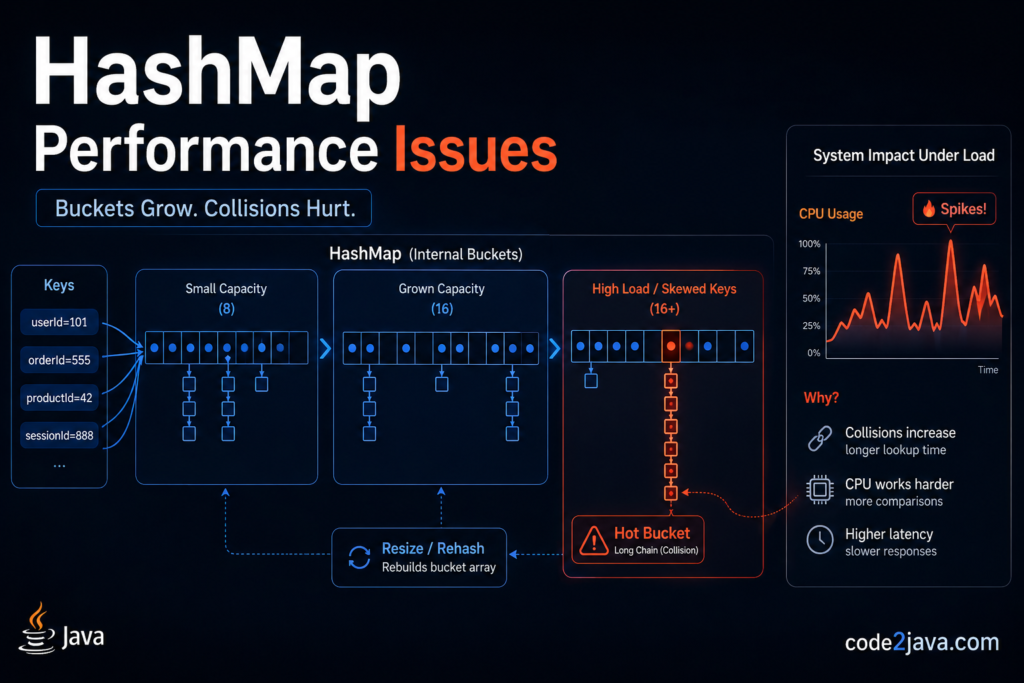
HashMap in Java — Internal Working, Production Failures, and the Guarantee You Should Never Trust Blindly
1. Production Problem The service was a transaction enrichment pipeline — a Java backend responsible for decorating payment events with […]
1. Production Problem The service was a transaction enrichment pipeline — a Java backend responsible for decorating payment events with […]

If you’ve worked with backend systems, you’ve already used concurrency—whether you realized it or not.
But most developers face this gap:
– They know the terms
– But don’t fully understand why problems happen and how to reason about them
This blog bridges that gap.
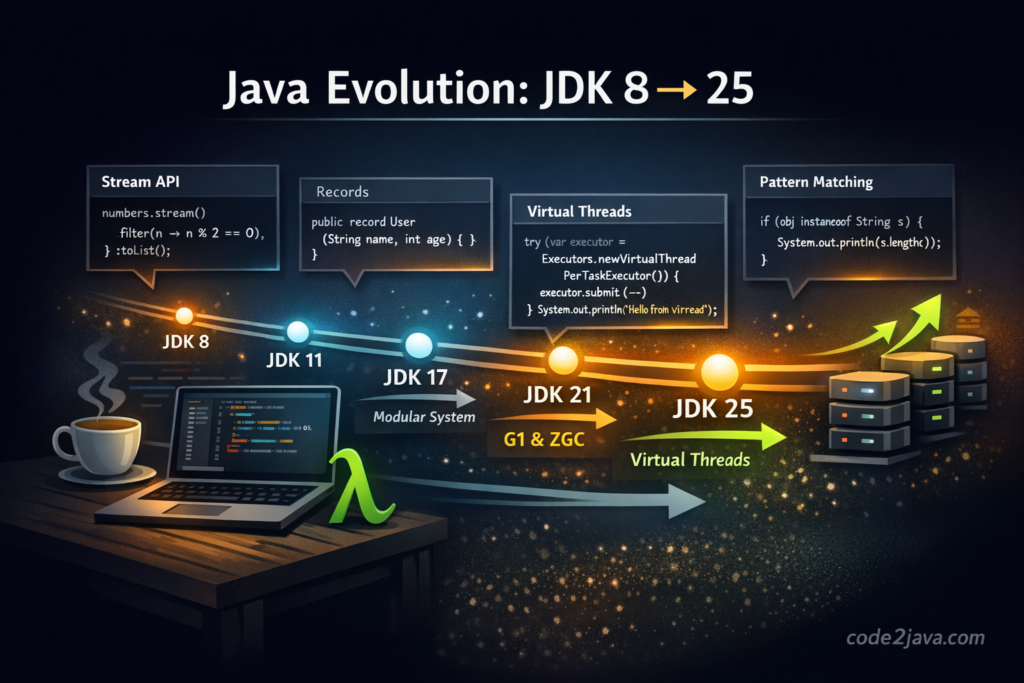
If you started Java around 2014–2016, chances are you lived in the world of Java 8 for a long time.
And honestly… Java 8 was revolutionary.
But what many developers don’t realize is 👉 the real transformation of Java happened after JDK 8.
Java didn’t just add features — it reinvented itself:
Faster release cycles
Modern language features
Massive performance upgrades
Completely new concurrency model (yes, Virtual Threads 🔥)
If you’ve ever designed a class hierarchy and thought:
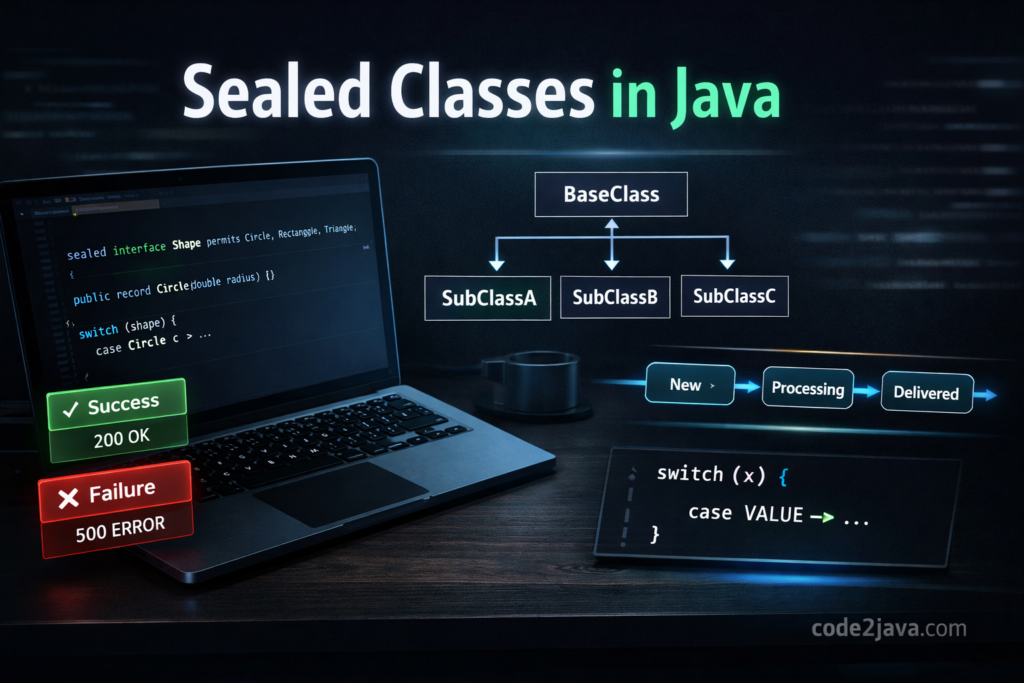
“I wish I could allow only specific classes to extend this…”
Then sealed classes are exactly what you need.
This feature is not just syntactic sugar — it fundamentally improves how we model real-world problems in Java.
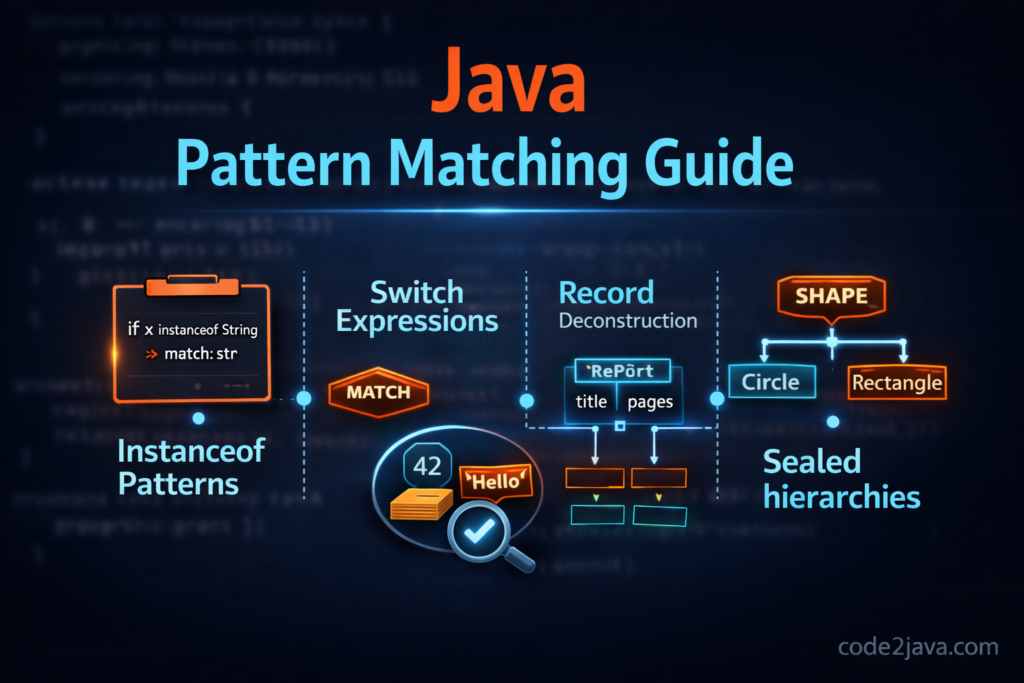
If you’ve been writing Java for a while, you probably remember this annoying pattern:
👉 Check type using instanceof
👉 Cast manually
👉 Then use the object
Pattern Matching removes this boilerplate and makes your code cleaner, safer, and more readable.
Let’s go step by step and understand how it evolved.

A complete step-by-step guide to Java 17 features covering what, why, when to use, real-world use cases, and practical code examples. Ideal for developers moving from Java 8 to modern Java